
Technology · Flameless combustion
Flameless combustion: one combustor, many fuels, ultra-low emissions
The MITIS flameless combustor is a multi-fuel stagnation point reverse flow design that burns gaseous and liquid fuels with no visible flame and no hot spots. In our M10 micro gas turbine it reaches below 5 ppm NOx and below 5 ppm CO without any exhaust treatment, from natural gas to hydrogen, ammonia and sour flare gas.
M10 data. Emissions are fuel dependent.
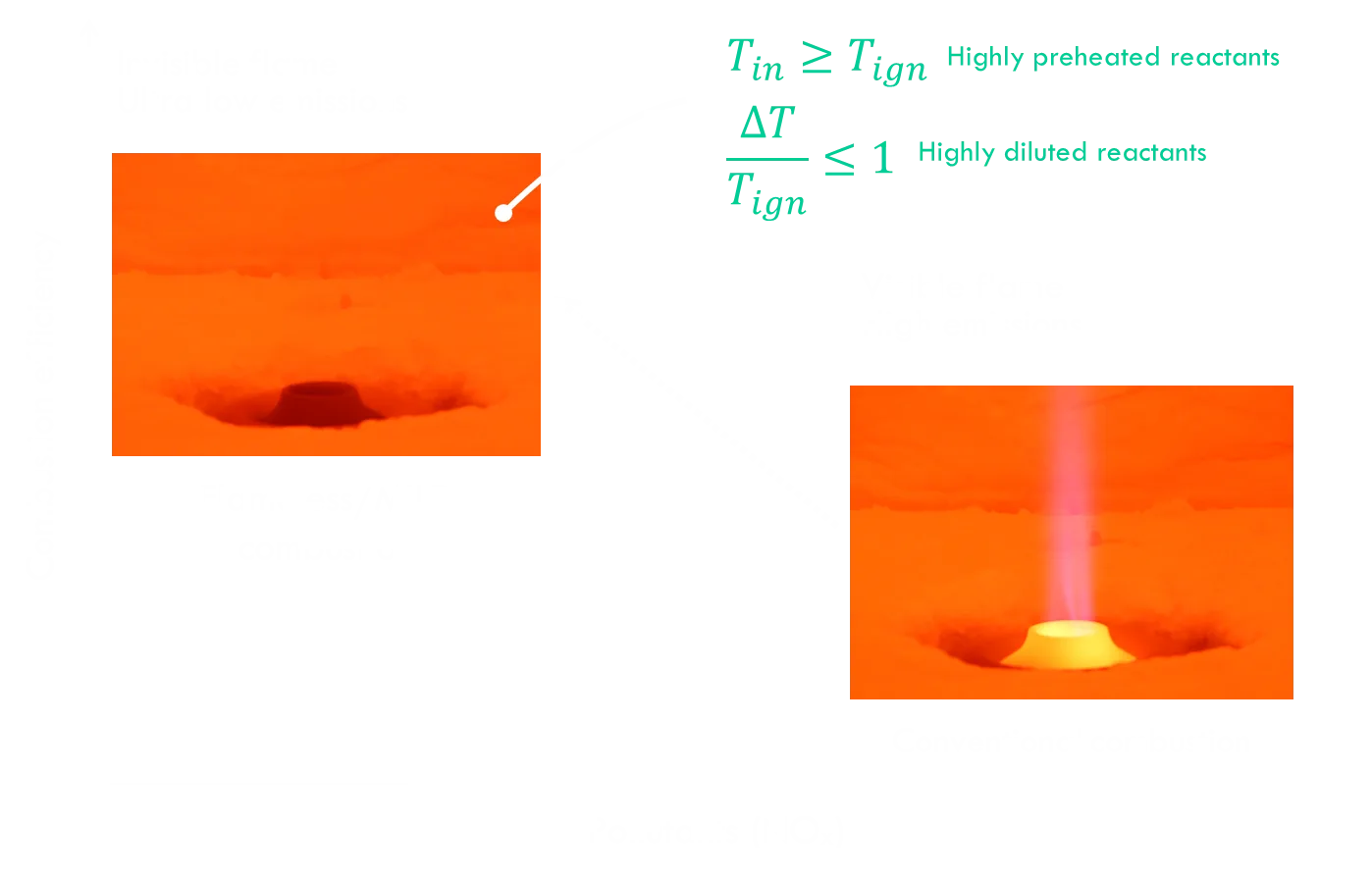
How flameless combustion works
- Strong recirculation mixes burnt and fresh gas, giving 99 % combustion efficiency.
- Combustion spreads over a large volume with no hot spots, so thermal NOx stays very low.
- Longer residence time burns out the CO: clean exhaust on lean, rich or sour gas.
- Lower, more uniform temperatures also reduce combustion noise.
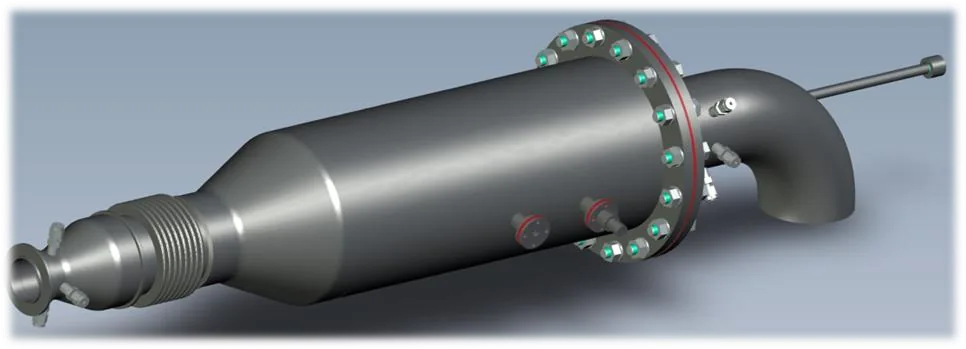
A stagnation point reverse flow combustor
Preheated air and fuel enter a fuel–air mixing zone and flow towards the closed end of the flame tube. The hot gas turns back, creating a high-temperature mixing zone where burnt and fresh gas meet. High turbulence and passive flow mixing ensure complete, uniform combustion, while a cooled sleeve protects the flame tube.
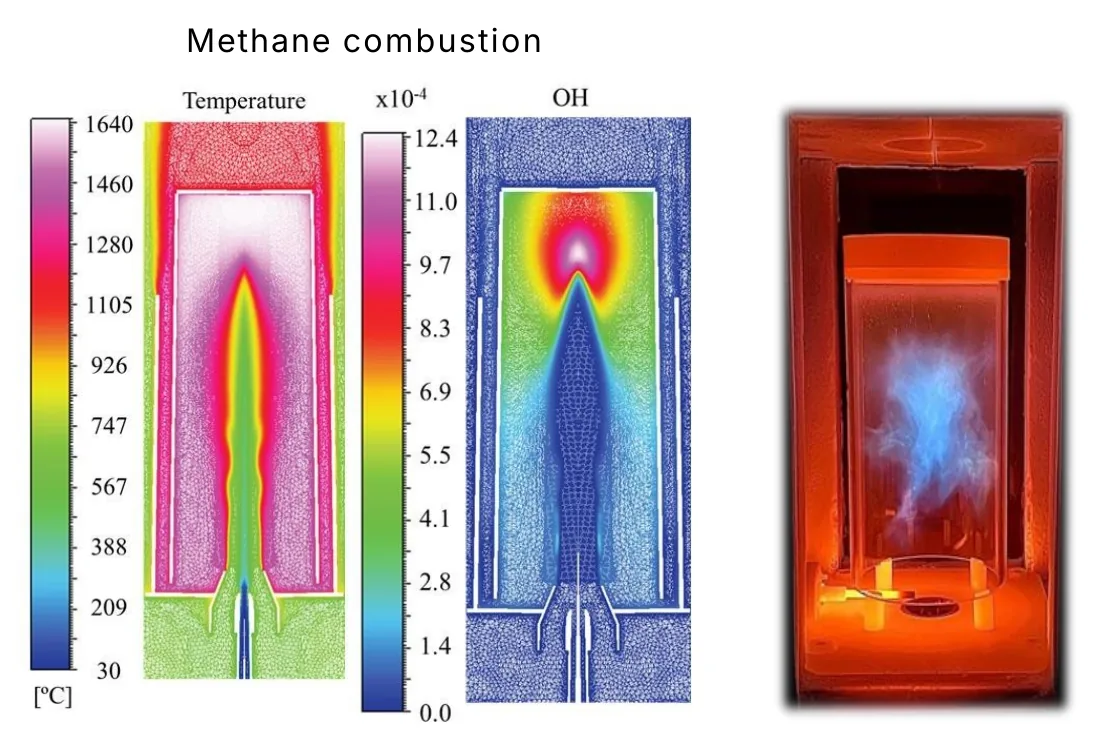
Backed by CFD
We model our combustors with 3D RANS simulations using flameless-specific closures, radiation and conjugate heat transfer. For sour gas, our model includes 132 species and 1,200 reactions, with sulphur chemistry.
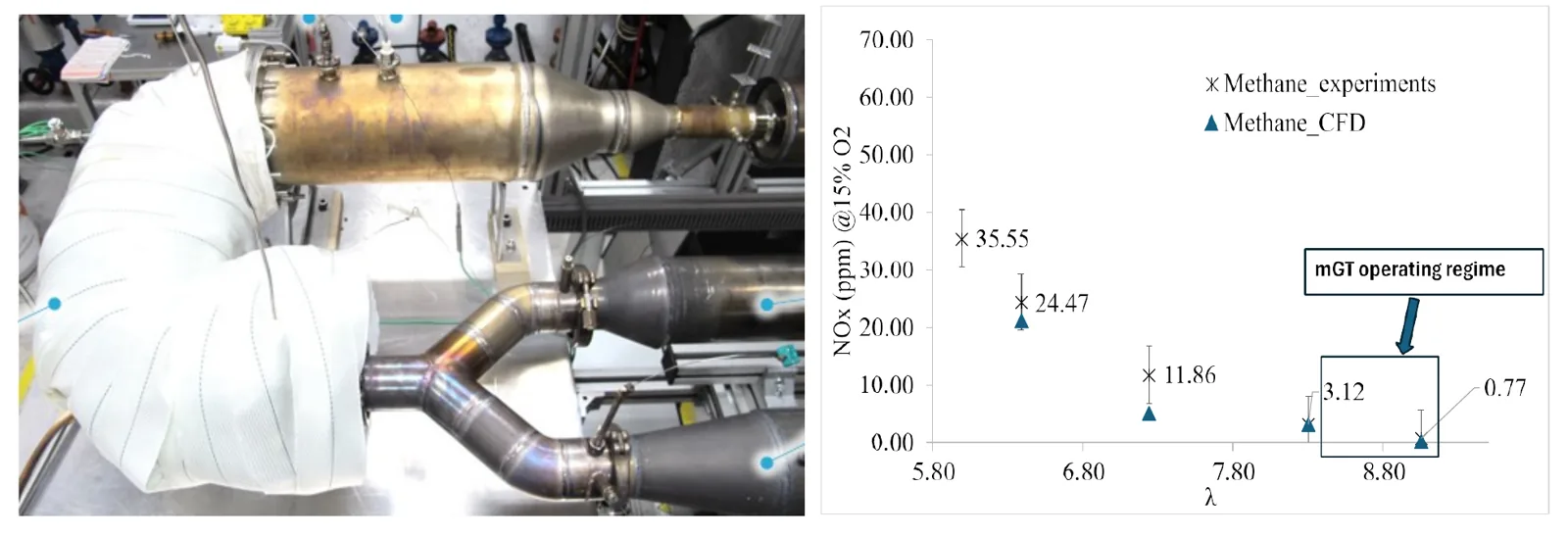
Proven on the test bench
At micro gas turbine operating conditions we measured about 3 ppm NOx at 15 % O₂ on methane. The combustor has been tested on natural gas, gasoline, heating oil, naphtha and pyrolysis oil.
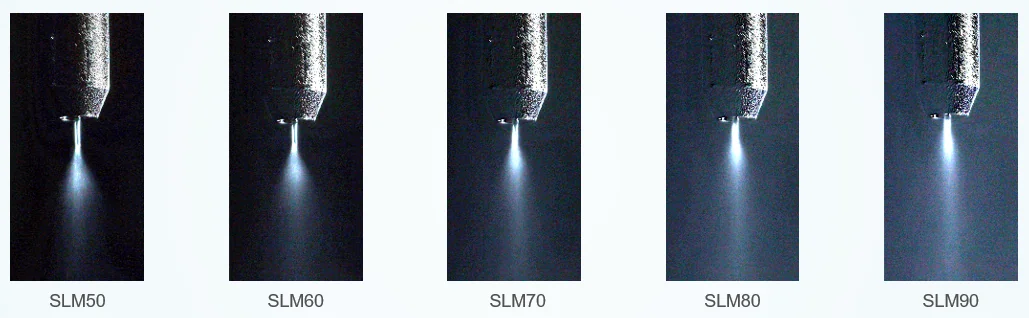
Liquid fuel capability
For liquid fuels, an air-blast atomizer feeds the same flameless combustor. We characterise the spray in our lab and model atomization and evaporation in CFD to optimise the combustion zone.
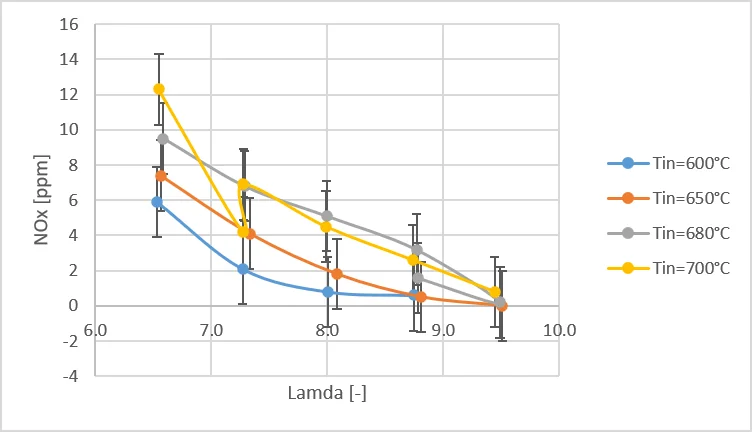
Gasoline, heating oil and biofuels
With gasoline, we mapped CO, NOx and combustor temperature against the air ratio for air inlet temperatures from 600 to 700 °C. Heating oil, diesel, naphtha and pyrolysis oil have been tested over the same nominal operating range.

From 10 kW to 1 MW
The same flameless hot-section technology that runs in our 10 kW M10 is at the core of the larger systems MITIS is developing, up to 1 MW, including versions designed for sour gas.
Fuels
Fuels for the MITIS combustor
Gaseous fuels
- Natural gas, associated gas and flare gas
- Biogas, landfill gas and syngas
- Hydrogen, natural gas–hydrogen blends, ammonia
Liquid fuels
- Diesel, gasoline and heating oil
- Ethanol and bioethanol
- Pyrolysis oil
Applications
Where flameless combustion fits
Methane abatement
Turn flare and vented gas into power instead of emissions.
Hydrogen & ammonia
Carbon-free fuels without the NOx penalty of conventional flames.
Combustor retrofit
Low-NOx, multi-fuel combustors for existing turbines and burners.
FAQ
Flameless combustion: frequently asked questions
What is flameless combustion?
Flameless (or MILD) combustion is a regime in which strong recirculation mixes burnt gas with fresh reactants. The reaction spreads over a large volume with no visible flame front and no hot spots, which keeps thermal NOx very low while burning out CO.
What emissions does the MITIS combustor reach?
On the M10 micro gas turbine the MITIS combustor reaches below 5 ppm NOx and below 5 ppm CO with no exhaust treatment, and about 99 % combustion efficiency. Emissions depend on the fuel.
Which fuels can it burn?
Natural gas, associated and flare gas, biogas, landfill gas, syngas, hydrogen and hydrogen blends, ammonia, and liquid fuels such as diesel, gasoline, heating oil, ethanol and pyrolysis oil. Sour gas is accepted: about 7,000 ppm H2S with standard materials, and much higher with adapted material selection.
What is a stagnation point reverse flow combustor?
In a stagnation point reverse flow (SPRF) combustor, the fuel–air jet is sent towards the closed end of the flame tube and the hot products flow back along it. This creates a strong internal recirculation that dilutes and preheats the fresh mixture, which is what enables flameless combustion without complex staging.
Can MITIS develop a flameless combustor for our application?
Yes. MITIS designs combustors from CFD to test bench, including retrofits of existing machines, fuel adaptations such as bioethanol, and sour-gas applications.
Need a cleaner, more flexible combustor?
From CFD studies to a tested combustor, our engineers can support your development.